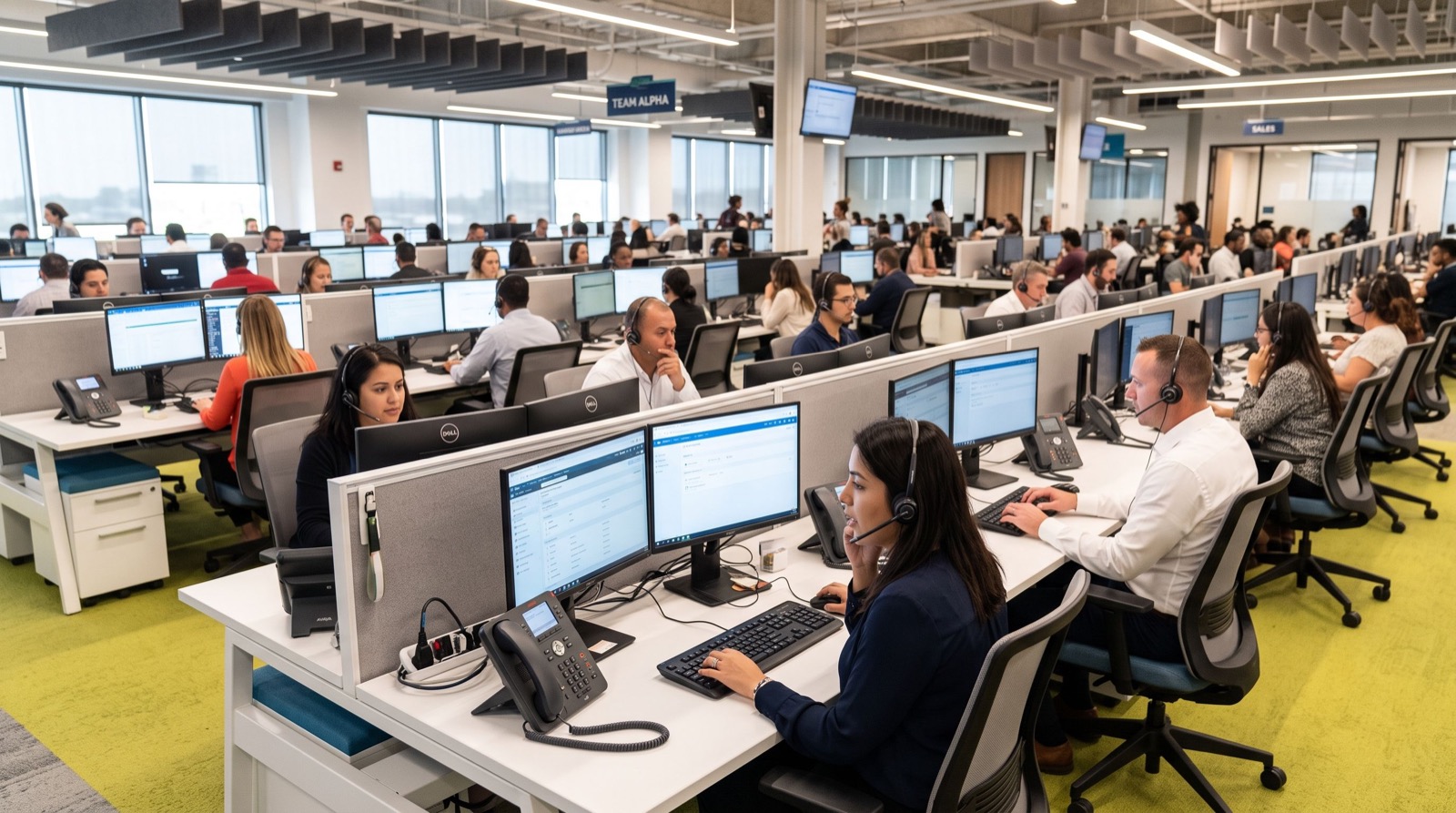
Speed is money in the service economy, and few investments move the needle faster than a well-built queue management system paired with smart drive-thru technology. From quick-service restaurants in Riyadh to pharmacies in Lahore, operators in 2026 are discovering that the wait line — whether on foot or in a car — is where loyalty is won or lost. Shave sixty seconds off a transaction and you serve more customers, reduce abandonment, and lift revenue without adding staff.
This article breaks down how in-branch queuing and drive-thru systems complement each other, the metrics that matter, and how to pick technology that scales. If your service points feel crowded during peak hours, the fixes below are practical and proven.
Why Wait-Time Technology Drives Real Revenue
Customers abandon slow lines. Studies of retail and food service consistently show that once a wait crosses a psychological threshold — often around five minutes on foot or four cars in a lane — walk-aways spike. Every abandoned visit is lost margin you already paid to acquire.
Technology fixes this on two fronts. Indoors, ticketing spreads demand across counters and keeps lobbies calm. At the curb, timing sensors and clear audio keep vehicles moving. Together they turn chaotic peaks into manageable, measurable flow.
The Data You Finally Get
- Average service time per transaction and per agent.
- Peak-hour heat maps to schedule staff precisely.
- Lane speed-of-service and car-count during rush.
- Abandonment and no-show rates you can act on.
In-Branch Queuing: The Foundation
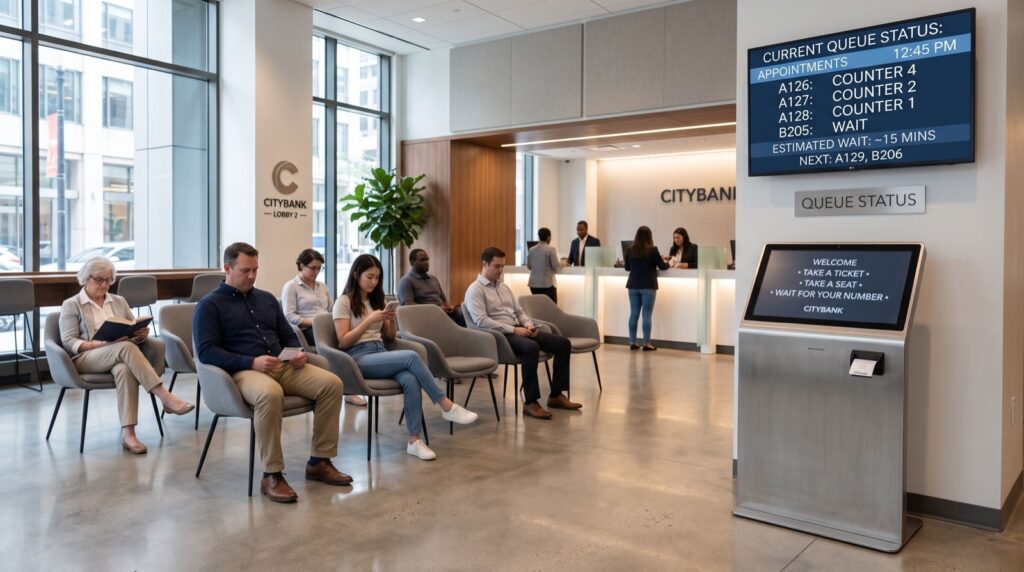
A ticketing platform assigns each visitor a number and routes them to the right counter. Digital signage calls the next ticket while SMS alerts let people wait comfortably. Managers watch a live dashboard and open extra counters before a backlog forms.
For organisations rolling this out across multiple locations, partnering with an experienced queue management system in saudi arabia provider ensures Arabic-English interfaces, carrier-grade SMS and reporting that satisfies head-office KPIs.
Drive-Thru Systems: Speed at the Curb
The drive-thru is a queue on wheels, and the same discipline applies. Modern lanes use vehicle-detection loops, dual-lane merging logic, and crystal-clear headset audio so order-takers understand customers the first time. Order-confirmation screens cut errors, and timing dashboards flag slow stations instantly.
Restaurants and pharmacies expanding curbside service increasingly deploy a dedicated Drive Thru Solution in pakistan to standardise speed across branches and keep every car moving.
Comparing In-Branch vs Drive-Thru Metrics
| Factor | In-Branch Queue | Drive-Thru Lane |
|---|---|---|
| Primary KPI | Wait time to counter | Speed of service per car |
| Bottleneck signal | Ticket backlog | Lane car-count |
| Customer alert | SMS / display | Confirmation screen |
| Target 2026 benchmark | Under 6 min | Under 4 min per car |
How Do You Roll Out Both Systems Without Chaos?
Deploying two systems at once feels daunting, but a phased plan keeps risk low. Start with the busiest single site, prove the numbers, then replicate.
- Audit current wait times and abandonment for a baseline.
- Pilot in-branch queuing at your highest-traffic location.
- Add drive-thru timing where curbside demand exists.
- Train staff on the dashboards, not just the hardware.
- Review data weekly and adjust staffing to peaks.
- Scale the validated blueprint to remaining branches.
The Psychology of Waiting You Can Exploit
Wait-time technology is as much about perception as clock time. Decades of service research show that occupied time feels shorter than unoccupied time, and uncertain waits feel longer than known ones. Smart operators design around these truths.
Indoors, a visible display counting down tickets and an SMS estimate turn anxious, uncertain waiting into calm, informed waiting. A customer who knows they have twelve minutes will run an errand and return relaxed, rating the experience highly even though the actual wait was identical.
At the drive-thru, the equivalent is the confirmation screen. Seeing the order appear correctly reassures the driver, reduces window disputes, and speeds the final handoff. Perception engineering, done well, lifts satisfaction scores without adding a single staff member.
Common Rollout Mistakes and How to Avoid Them
Plenty of deployments underperform, and the reasons repeat. Learn from them before you spend.
- Skipping the baseline audit — without before-data, you can never prove ROI or diagnose bottlenecks.
- Treating it as hardware, not workflow — the dashboards must change how staff are scheduled, or nothing improves.
- Ignoring localisation — Arabic and Urdu interfaces and carrier-specific SMS are non-negotiable for adoption.
- Over-buying counters — start lean, let the data justify expansion rather than guessing.
- No peak-hour plan — Ramadan, paydays and weekends need pre-planned overflow staffing.
A concrete field tip: run your pilot during a genuine peak, not a quiet week. The system that shines on a slow Tuesday may buckle on a Friday evening rush, and you want to know that before you scale.
Integrating With the Wider Business Communication Stack
Queuing and drive-thru systems deliver more value when they connect to your phones, CRM and signage. When a complex case escalates in-branch, the agent should be able to loop in a specialist over VoIP without leaving the counter. When a drive-thru order needs a manager override, the same unified stack should make it instant. Buy platforms with open APIs so these connections stay possible as your needs grow.
Choosing a Trustworthy Provider
Hardware fails without support behind it. Choose partners with local spare parts, Arabic and Urdu-capable teams, and reference sites. Standards matter too: the European Telecommunications Standards Institute stresses interoperable, open communication protocols, which future-proof your investment. When comparing quotes, lean on reliable local experts who can integrate queuing, signage and drive-thru audio as one coherent stack.
Frequently Asked Questions
Can a queue system and a drive-thru share the same reporting?
Yes. Well-designed platforms feed both indoor tickets and lane-timing data into a single analytics dashboard, so managers compare branches and channels side by side.
How quickly do these systems pay for themselves?
Most operators recover the cost within the first two to four quarters through higher throughput, fewer walk-aways and better staff scheduling.
Do drive-thru systems work in high heat or dust?
Reputable outdoor hardware is rated for harsh climates, with sealed headsets and heat-resistant screens suited to Gulf and South Asian conditions.
What is the biggest mistake buyers make?
Buying hardware without a support and training plan. The technology only delivers ROI when staff use the dashboards to change scheduling and workflow daily.
Conclusion
A modern queue management system and a well-tuned drive-thru together turn your slowest hours into your most profitable. In 2026, customers reward speed and punish delay, so measuring and trimming every wait is simply good business. Start with one branch, prove the data, and scale the winning formula. Ready to cut your wait times and serve more customers? Reach out to a specialist and build a rollout plan today.